
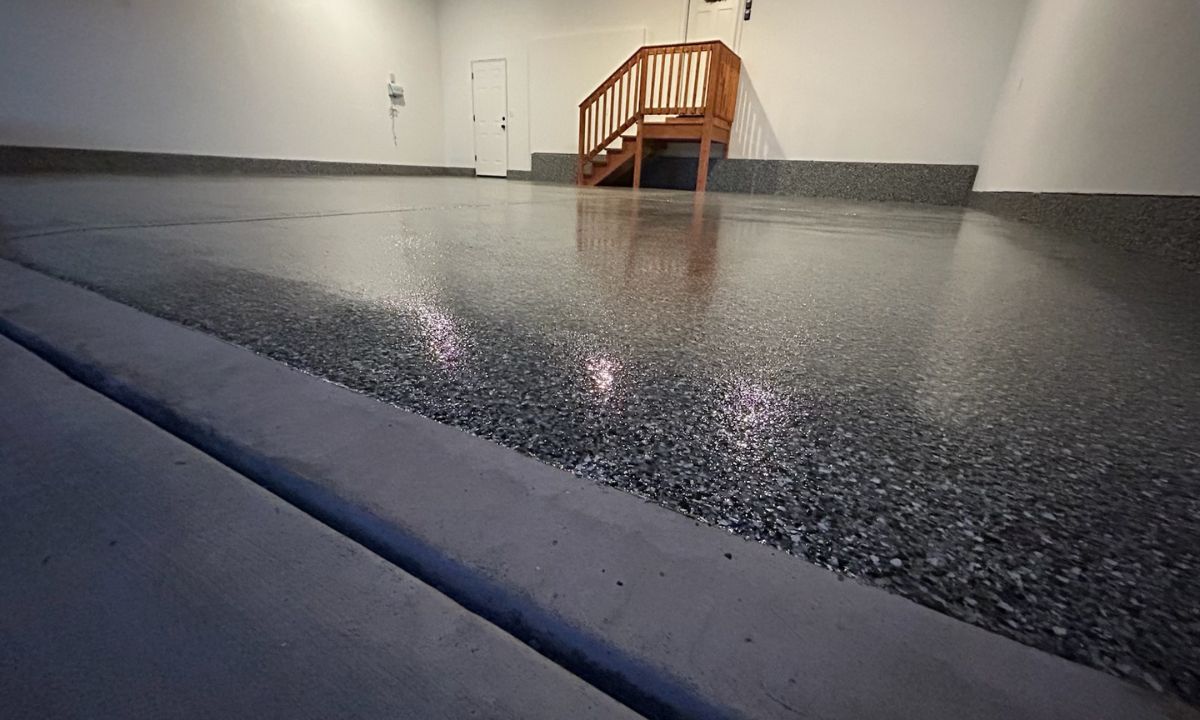
Your coated floor can handle just about anything—but winter loves to test its limits. Salt eats, sand scratches, and slush sneaks into every corner. Luckily, protecting it doesn’t take much. A quick care routine keeps that showroom finish long after the thaw.
What Salt, Sand, and Snowmelt Actually Do
Salt: The Hidden Enemy
Deicing salt lowers water’s freezing point, but it also accelerates chemical wear. When carried inside on tires or shoes, salt granules break down surface coatings over time and can dull the finish.
Good news: Polyurea and epoxy coatings are resistant to chloride damage—but they’re not invincible. A quick mid-winter rinse can make all the difference.
Sand: Helpful… Until It Isn’t
Sand provides traction on icy surfaces, but when tracked indoors, it acts like sandpaper underfoot. Over time, those grains can scratch topcoats and reduce gloss.
Tip: Regular sweeping or vacuuming prevents abrasion and keeps your coating’s finish looking clean.
Melting Snow: The Slow Drip
Snow and slush bring moisture that seeps into cracks, corners, and joints. When it refreezes, it expands—causing micro-fractures in uncoated concrete and dull spots on neglected coatings.
Pro move: Place mats at entry points and consider a small floor squeegee or shop vac to handle standing water quickly.
How to Protect Your Coated Floor All Season
To be clear, your coated floor can handle a lot. It laughs in the face of salt, shrugs off mud, and stays easy to clean when traditional concrete would already be crumbling and stained. But even the strongest surfaces deserve a little care.
You invested in a floor built to last—take a few simple steps to keep it that way. Think of this as maintenance, not micromanagement. A little attention now saves you from frustration and repairs later.
1. Sweep Often
Dust, salt, and sand don’t just look dirty—they shorten the life of your coating. Use a soft broom or microfiber mop weekly to prevent buildup.
2. Neutralize Salt Residue
Avoid harsh cleaners. Instead, mix warm water with a pH-neutral solution to dissolve residue safely. This protects both the coating and its traction texture.
3. Keep Mats in the Right Places
Rubber-backed, absorbent mats at doors and garage transitions catch most debris before it spreads. For businesses, change mats more often during high-traffic months.
4. Handle Standing Water Quickly
Snowmelt pools can reduce traction and seep into seams. A quick mop-up helps prevent dull spots or icy buildup overnight.
5. Schedule a Post-Winter Checkup
After winter, a light cleaning or reseal keeps coatings fresh. Polyurea systems can be re-topcoated to restore gloss and traction without a full refinish.
Winter Tips for Different Spaces
Garages
Use floor mats under vehicles to catch salt runoff. If water puddles often, lightly rinse with warm water and mild soap every few weeks.
Entryways & Mudrooms
Add extra matting where pets and boots track in snow. Medium-grip traction finishes hold up well to wet shoes and paws.
Commercial & Shop Floors
Sweep daily to prevent salt dust from damaging machinery or electrical areas. High-traffic coatings with grit additive are best for winter traction.
Local Insight: Kansas Winters and Coating Care
Wichita’s mix of freeze-thaw cycles and road salt means winter maintenance isn’t optional—it’s protection for your investment. A few minutes of care each week prevents surface dulling and extends the life of your floor by years.
It’s also about safety: controlling salt and moisture reduces slips, protecting both families and employees.
FAQ: Winter Concrete Coating Care
Do I need to reseal my floor every winter?
No. Most polyurea and epoxy coatings last for years between reapplications. Seasonal cleaning and topcoat maintenance are usually enough.
What’s the best cleaner for winter salt?
Use a pH-neutral cleaner—avoid acids, ammonia, or bleach. A gentle rinse and soft mop work best.
Can I pressure wash my coated floor?
Yes, but use low pressure and avoid hot water on freezing days. Gentle rinses remove salt without damaging the coating.
Final Takeaway
Winter brings its own set of challenges—but it doesn’t have to shorten your floor’s lifespan. A small amount of maintenance keeps your coating safe from salt, sand, and snow while preserving traction and shine.Want our team to walk you through a winter care plan for your coated floor? We’ll help you keep it protected and ready for next season. Let’s start the conversation.