A garage can easily become a catchall—half workspace, half storage, half chaos. But with a little planning, it can do it all and still look pulled together. Creating intentional garage storage zones helps you keep tools, sports gear, and seasonal items organized without constant rearranging.
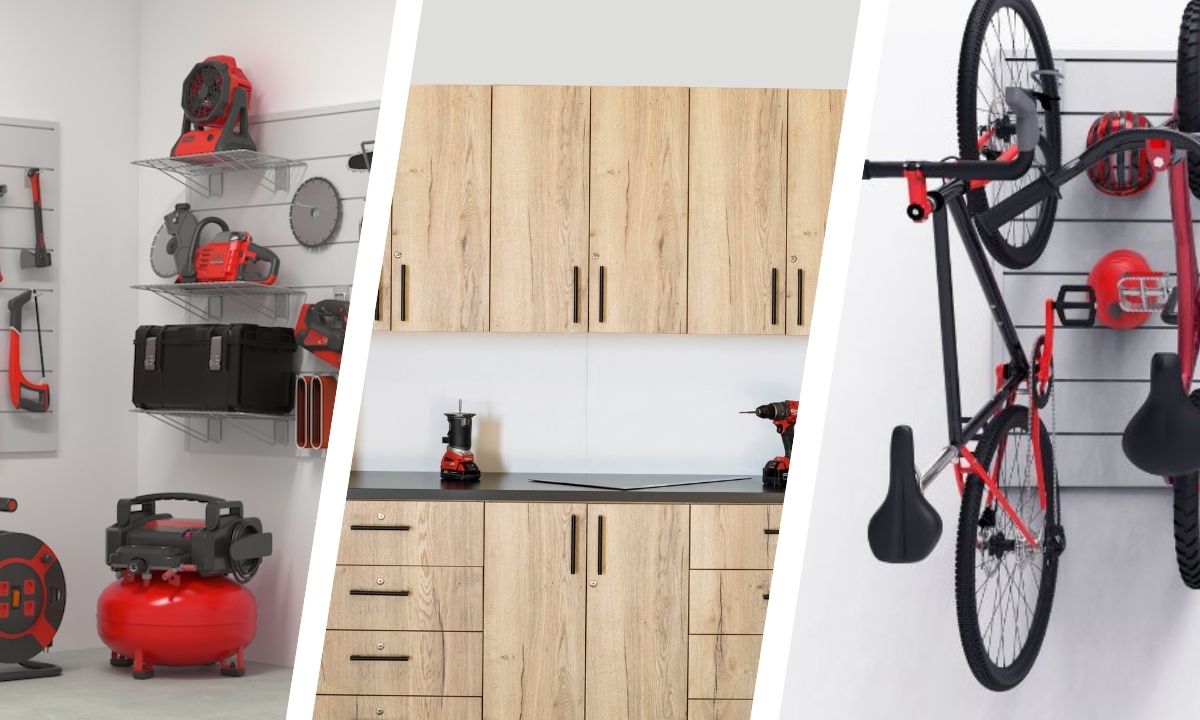
The key is to think in zones, not piles. Each area should serve a purpose, with the right mix of cabinets, slatwall, and open space that fits how you actually use your garage.
Step 1: Start with How You Use Your Garage
Before deciding what goes where, think about what your garage does for you.
Do you park daily? Tinker with tools? Store camping gear? Or just try to keep things off the floor?
List your biggest categories—typically:
- Tools & Projects
- Sports & Outdoor Gear
- Seasonal Storage
- Cleaning & Household Supplies
Understanding how often you use each group will tell you what deserves prime placement and what can live higher up or out of reach.
Step 2: Define Your Garage Storage Zones
When you divide your space by function, it’s easier to find what you need (and actually put it back). Here’s a simple zoning plan most garages can adapt:
- Zone 1: Everyday Access (Near the Door): Keep shoes, recycling bins, pet supplies, and grab-and-go items here. Slatwall hooks and open shelves make quick drop-offs easy.
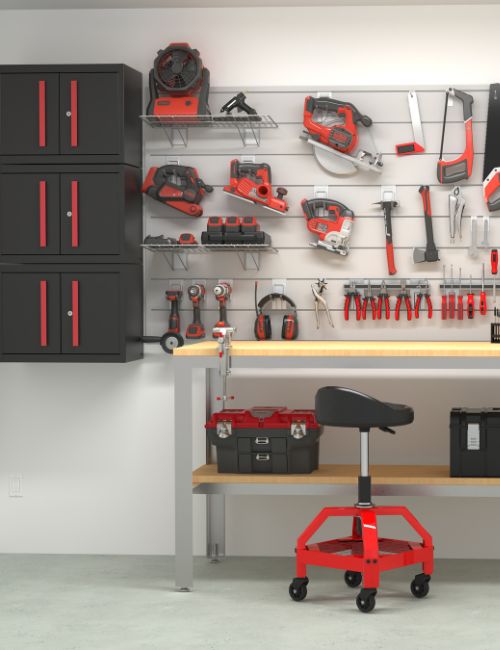
- Zone 2: Tools & DIY Area: Cabinets and workbenches shine here. Store power tools behind closed doors to keep dust down and use slatwall above for small hand tools and cords.
- Zone 3: Sports & Outdoor Gear: Bats, gloves, bikes, helmets, and skates belong on adjustable slatwall panels. Mesh baskets and wide hooks make it easy for kids to put things back on their own.
- Zone 4: Seasonal & Long-Term Storage: Think decorations, patio cushions, or snow gear. These can go up high in overhead racks or tall cabinets with labeled bins.
- Zone 5: Clean-Up & Maintenance Corner: Keep brooms, cleaning supplies, and extra floor mats here for quick touch-ups—especially helpful during muddy or snowy months.
Step 3: Use Cabinets for What You Don’t Want to See
Cabinets bring structure and polish to a garage layout. They hide clutter and protect tools, fluids, and supplies from dust or moisture.

Best cabinet uses:
- Paint, oil, and cleaners that need sealed storage
- Small hardware sorted by type
- Garden tools, cords, and safety gear
- Foldable chairs and compact seasonal items
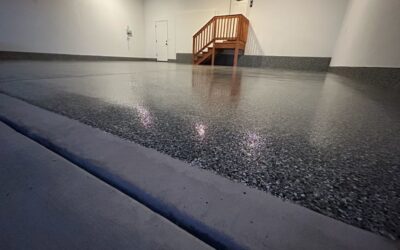
Choose cabinet finishes that complement your wall color or flake floor system to make the garage feel cohesive and finished, not utilitarian.
Step 4: Use Slatwall for What You Grab Often
If cabinets are the backbone, slatwall is the muscle—flexible, visible, and endlessly adjustable.
Hooks, baskets, and racks can move as your needs change, making it ideal for:
- Sports gear and helmets
- Yard tools and extension cords
- Folding ladders
- Brooms, mops, and reusable bags
Slatwall keeps the floor clear, which means your garage stays cleaner and your coating lasts longer.
Step 5: Leave Room to Move
Even the best organization fails if it blocks movement. Leave enough clearance for:
- Door swings
- Vehicle width (including mirrors)
- Walking paths between zones
Think about ergonomics, too. Store heavier items waist-high and lighter gear higher up. This makes it easier to grab what you need without rearranging your setup.
Design Tip: Coordinate Storage with Your Floor Finish
Cabinets and slatwall can be matched or contrasted with your garage floor coating for a clean, intentional look.
- Neutral tones: Pair gray or beige floors with sleek black or white cabinets for a modern feel.
- High contrast: Combine a flake floor with a bold cabinet color to create visual energy.
- Warm palette: Use woodgrain finishes to soften industrial spaces or complement brick walls.
Your storage should look like part of the plan—not an afterthought.
Bonus: Label, Light, and Maintain
- Label everything. Use simple text or icons on bins and drawers to make finding things faster.
- Light it right. Task lighting above the workbench and soft overhead lighting in storage zones make a big difference.
- Tidy quarterly. Seasonal cleanouts help you keep only what you actually use—and rediscover forgotten gear before you buy it again.
Final Takeaway
A well-zoned garage makes every project, errand, or weekend cleanup smoother. With cabinets for what you want to hide and slatwall for what you need at a glance, your space becomes less of a catchall and more of a system that works.
Want our team to walk you through cabinet and slatwall layouts that fit your garage? We’ll help you plan zones that look sharp and make daily life easier. Let’s talk!